Insights are only valuable if they drive action. This guide provides practical strategies for implementing optimizations based on your Microscope.ai analysis results.
From Insight to Action
The Action Cycle
- Analyze results
- Identify opportunities
- Prioritize actions
- Plan implementation
- Execute changes
- Measure impact
- Iterate and improve
The key to AI optimization success is consistent, measured action rather than sporadic big efforts.
Types of Actions
Content Updates
When: Inaccurate or outdated information detected
- Update product descriptions
- Correct factual errors
- Refresh outdated content
- Fix broken links
- Update pricing and availability
Timeline: Immediate (24-48 hours)
Impact: High for accuracy issues
Content Creation
When: Visibility gaps or missing information
- Create missing product pages
- Write use case content
- Develop comparison guides
- Build FAQ pages
- Create technical documentation
Timeline: 1-4 weeks depending on scope
Impact: Medium-High, builds over time
SEO Optimization
When: Low visibility in certain areas
- Optimize page titles and meta descriptions
- Improve internal linking
- Enhance content structure
- Add schema markup
- Build authority signals
Timeline: 2-8 weeks to see results
Impact: Medium, cumulative effect
Competitive Positioning
When: Losing to competitors in key prompts
- Highlight unique differentiators
- Create head-to-head comparisons
- Build competitive content
- Strengthen value propositions
- Address competitive weaknesses
Timeline: Ongoing, 4-12 weeks
Impact: High for competitive scenarios
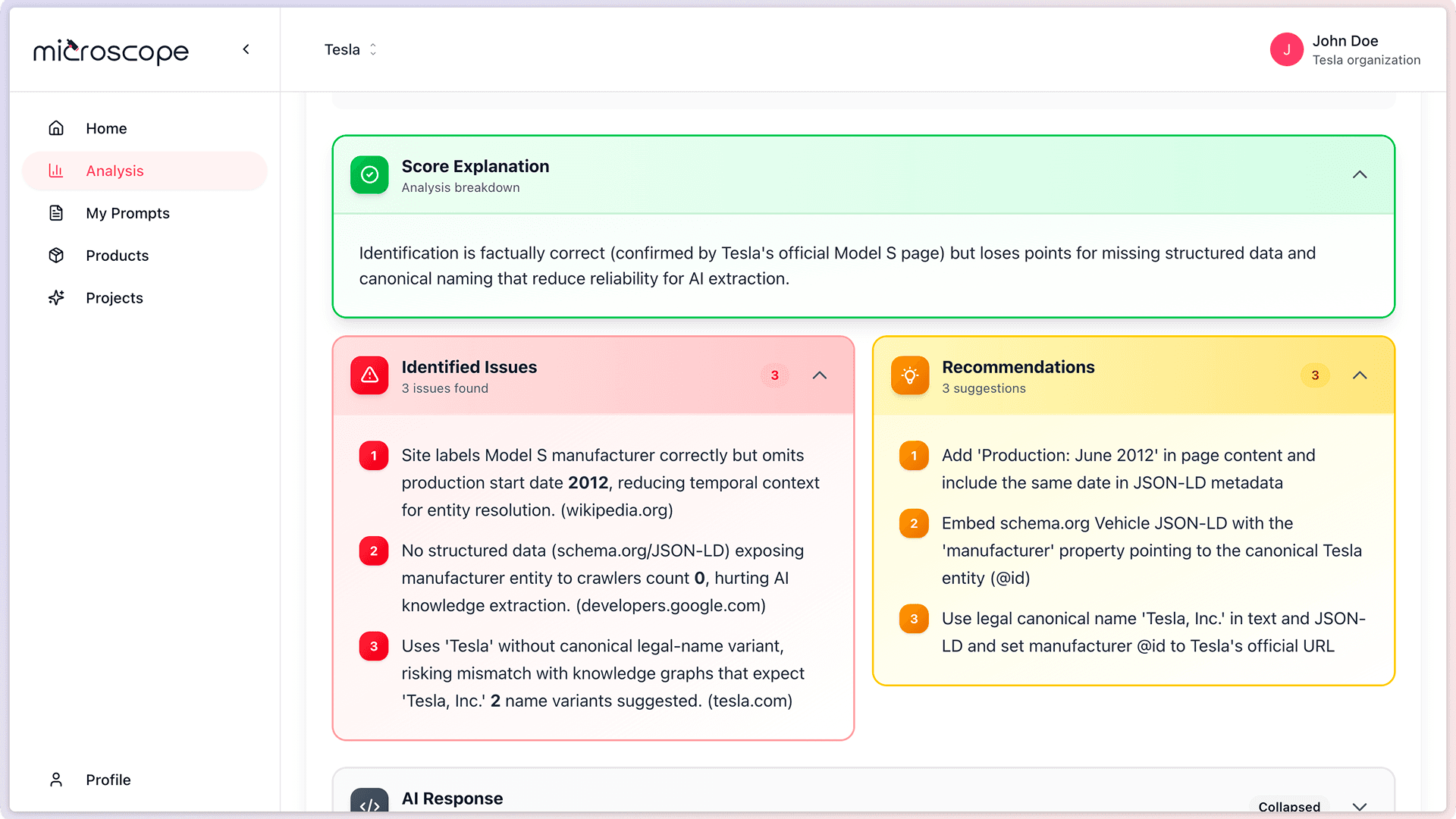
Action Planning Framework
Define the Action
- What needs to be done
- Why it matters (expected impact)
- Who is responsible
- When it should be completed
- How success will be measured
Create Action Items
Break down each opportunity into specific tasks:
- Be specific and concrete
- Make actions measurable
- Set realistic deadlines
- Assign clear ownership
- Define success criteria
Example Action Plan
Opportunity: Low Product category score (45%)
- Action 1: Update all product descriptions (Owner: Product team, Due: 2 weeks)
- Action 2: Add missing use cases (Owner: Marketing, Due: 3 weeks)
- Action 3: Create product comparison page (Owner: Content, Due: 4 weeks)
- Success metric: Product category score reaches 65%+ in next analysis
Quick Fixes (Do First)
Accuracy Corrections
- Find all inaccurate mentions
- Document correct information
- Update website content
- Verify changes are live
- Re-run analysis to confirm improvement
Broken Elements
- Fix broken links
- Update dead URLs
- Correct typos
- Fix technical errors
- Ensure all pages load correctly
Basic Information
- Add missing company details
- Complete product specifications
- Include pricing information
- Add contact information
- Ensure basics are covered
Content Development Strategy
Content Audit
- List all identified content gaps
- Review existing content quality
- Identify update vs. create needs
- Prioritize by business impact
- Create content roadmap
Content Creation Process
- Research topic thoroughly
- Write for clarity and completeness
- Include relevant keywords naturally
- Structure content well
- Add internal links
- Include media and examples
- Publish and promote
Content Optimization
- Review AI responses about your content
- Identify what AI understands well
- Strengthen weak areas
- Add missing context
- Improve content structure
- Enhance readability
Measuring Action Impact
Before Taking Action
- Document current performance
- Note specific metrics to watch
- Set improvement targets
- Establish timeline for impact
- Create comparison baseline
After Implementation
- Wait appropriate time (2-4 weeks)
- Run new analysis
- Compare to baseline
- Measure metric changes
- Document results
Success Indicators
- Improved category scores
- Higher mention rates
- Better positioning
- Increased accuracy
- Positive trend direction
Common Action Scenarios
Scenario: Low Mention Rate
Actions:
- Create comprehensive content on missing topics
- Build authority through thought leadership
- Improve SEO for relevant keywords
- Ensure proper site structure
- Promote content to build signals
Scenario: Poor Positioning
Actions:
- Strengthen unique value propositions
- Create competitive comparison content
- Highlight differentiators prominently
- Build case studies and proof points
- Improve messaging clarity
Scenario: Accuracy Issues
Actions:
- Immediate content corrections
- Update all web properties
- Ensure consistency across platforms
- Add authoritative sources
- Regular accuracy monitoring
Scenario: Category Weakness
Actions:
- Focus content creation on weak category
- Update relevant product information
- Create category-specific resources
- Build topical authority
- Monitor category-specific improvement
Building an Action Workflow
Weekly Action Rhythm
- Monday: Review latest analysis
- Tuesday: Identify and prioritize actions
- Wednesday-Thursday: Implement quick fixes
- Friday: Plan bigger initiatives
- Document progress continuously
Monthly Action Cycle
- Week 1: Comprehensive analysis
- Week 2: Action planning and prioritization
- Week 3-4: Implementation
- Week 4: Measure impact and iterate
Avoiding Common Pitfalls
- Analysis paralysis - Don't over-analyze, start acting
- Doing too much - Focus on high-impact actions
- Not measuring - Always track if actions work
- Giving up too soon - AI takes time to learn
- Random actions - Base actions on data
- Ignoring easy wins - Do quick fixes first
- Not documenting - Track what you try
Collaboration and Accountability
Team Involvement
- Content team: Creates and updates content
- Product team: Ensures accurate product info
- SEO team: Optimizes technical elements
- Marketing: Builds authority and promotion
- Leadership: Prioritizes and resources
Progress Tracking
- Use project management tools
- Weekly status updates
- Clear deadlines and ownership
- Regular check-ins
- Celebrate completed actions
Best Practices
- Start small - Quick wins build momentum
- Be consistent - Regular small actions beat sporadic big ones
- Measure everything - Know what works
- Iterate quickly - Try, measure, adjust
- Document learnings - Build institutional knowledge
- Stay focused - Don't try to fix everything
- Be patient - AI presence improves gradually
When to Expect Results
- Immediate (1-2 weeks): Accuracy corrections
- Short-term (2-4 weeks): Content updates
- Medium-term (1-3 months): New content, SEO changes
- Long-term (3-6 months): Authority building, positioning
Consistent execution of small, targeted actions is more effective than occasional major overhauls.
Next Steps
With action strategies mastered, you're ready to:
- Build sustainable optimization processes
- Drive continuous AI presence improvement
- Measure ROI of AI monitoring
- Achieve long-term strategic goals