Your first project in Microscope.ai is where your AI monitoring journey truly begins. A project serves as a container for all monitoring activities related to a specific brand, website, or business unit. This guide will walk you through creating your first project step by step.
Understanding Projects
Before creating your project, it's helpful to understand what a project represents in Microscope.ai.
What is a Project?
A project is a dedicated workspace within your organization that contains:
- Brand information - Details about the brand or business you're monitoring
- Website configuration - The website(s) being analyzed
- Product catalog - Products or services to monitor
- Prompts - Questions to ask AI models
- Analyses - Collections of prompts to run together
- Results - Historical data and insights from executions
Why Create Separate Projects?
Organizations typically create multiple projects to:
- Separate brands - Monitor different brands independently
- Segment markets - Track performance by geographic region or language
- Organize by business unit - Give each division its own monitoring space
- Test vs. production - Experiment with settings without affecting live monitoring
- Client separation - For agencies managing multiple clients
Before You Start
Gather the following information before creating your project:
Required Information
- Project name - A descriptive name (e.g., "Acme Corp - US Market")
- Brand name - The brand being monitored
- Website URL - Your primary website
- Industry - Your business sector
Optional but Recommended
- Brand description
- Target audience details
- Geographic focus
- Key products or services
- Main competitors
Step-by-Step Project Creation
Step 1: Access the Projects Page
- Log in to your Microscope.ai account
- From the left sidebar, click Projects
- You'll see your projects list (empty if this is your first)
- Click the New Project button

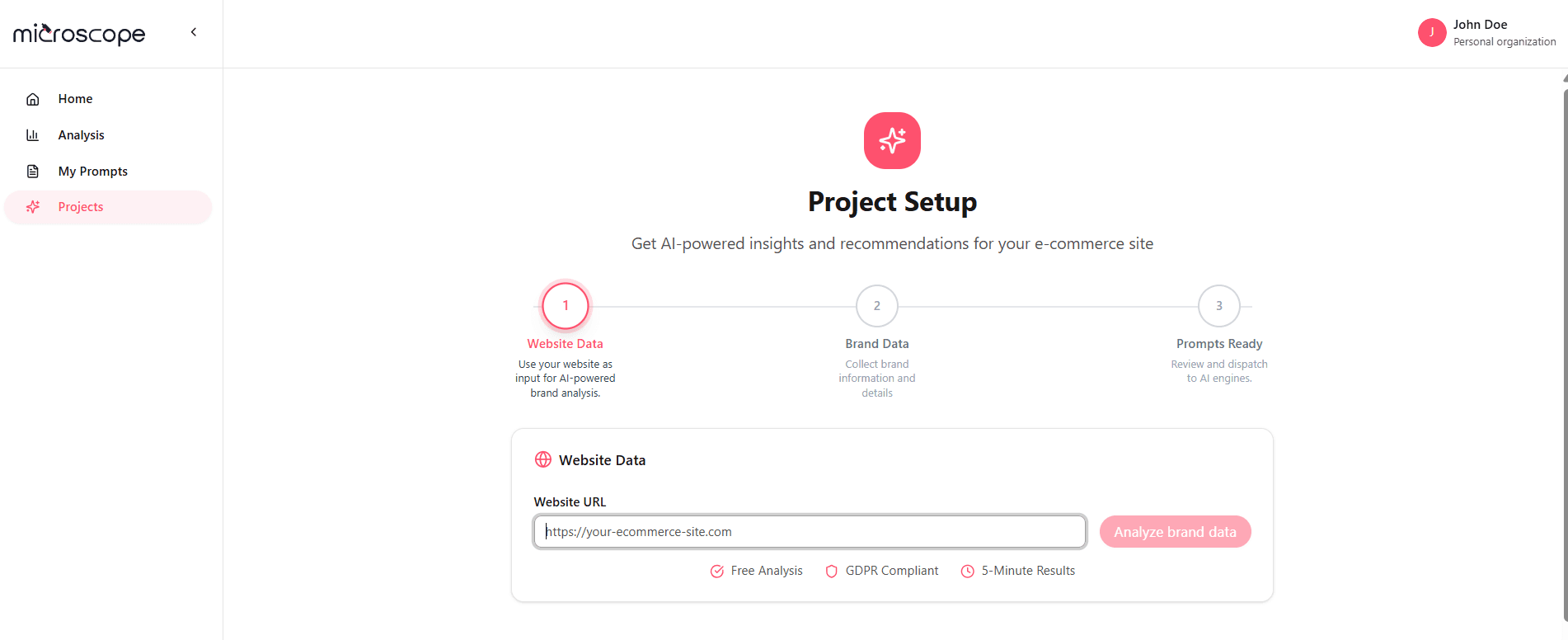
Step 2: Enter Website Data
- Website URL - Enter the target URL.
- Click the Analyze brand data button.
Step 3: Add Brand Information
The project creation wizard will guide you through several steps:
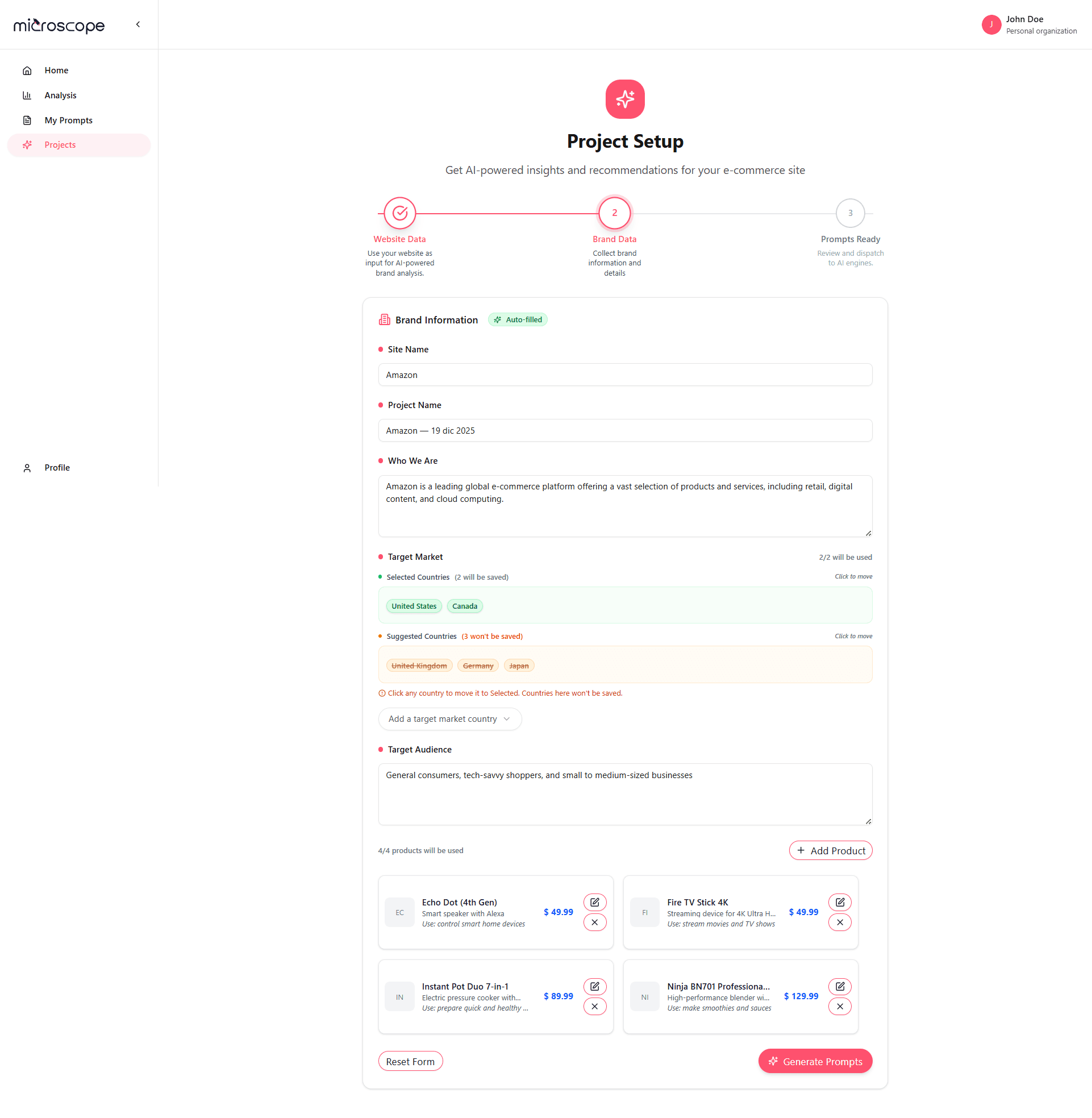
- Site name - By default, the site name corresponding to the URL will be assigned, but it can be optionally modified.
- Project Name - Give your project a clear, descriptive name
- Who we are(optional) - Add context about what this project monitors
- Target Market- Selectable tags that allow you to define the target market. You can choose multiple tags, depending on your needs.
- Target Audience - Who your brand serves (optional)
- Managing Products: Products are the items or services you want Microscope.ai to analyze and monitor. Each project can include multiple products, and the AI will analyze positioning, features, and market perception for each one. This section covers how to view, add, edit, and remove products from your project.
This information helps Microscope.ai understand your brand context when analyzing AI responses.
Understanding the Products Section
- Product List - All products currently included in your project. Each product displays: Product name, product description, use case (how the product is used), image and price
- Action Buttons - Edit or delete options for each product
- Progress Indicator - Shows how many products you're using
- Add Product Button - To include new products
Adding a New Product
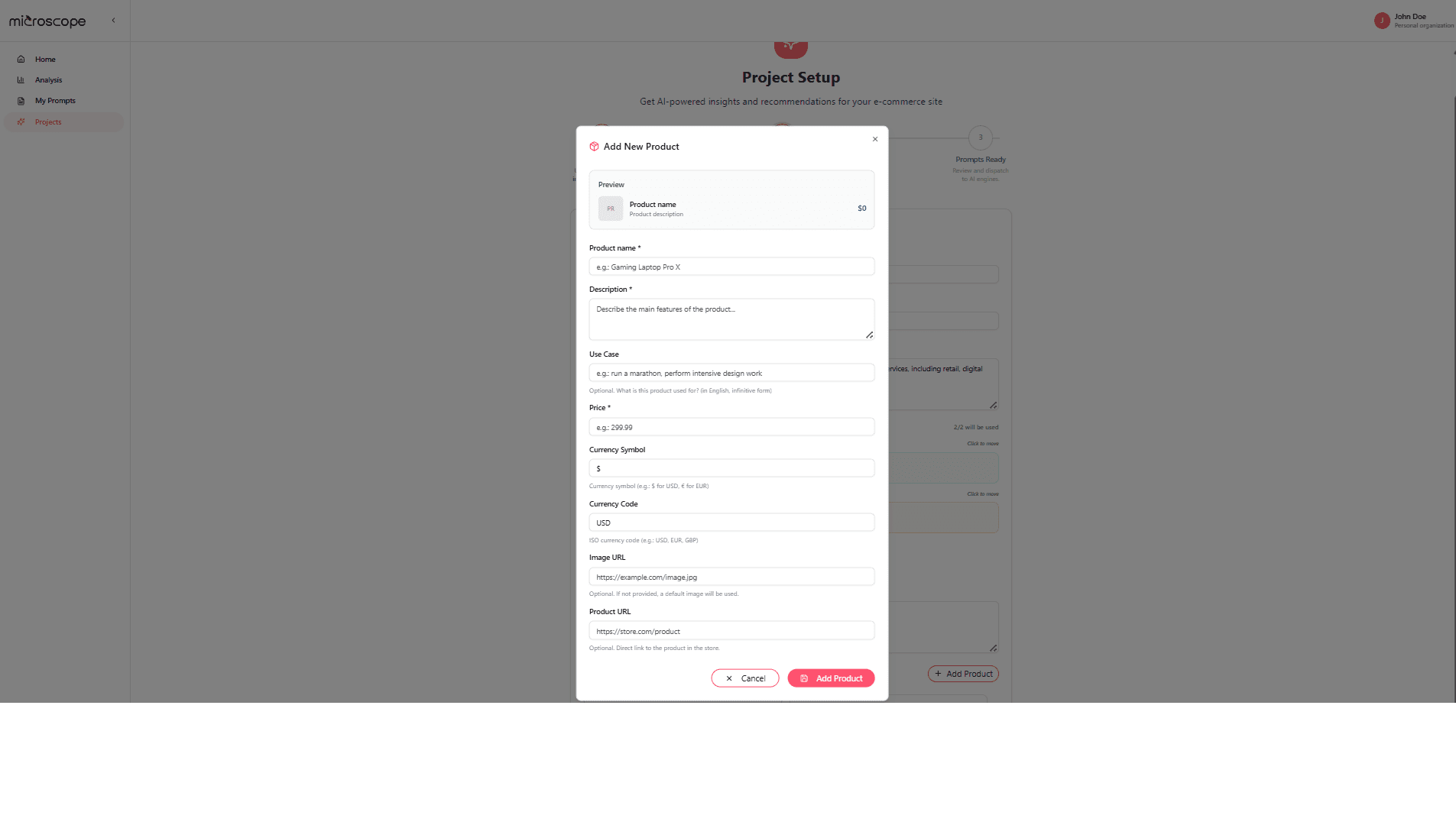
To add a new product,
- Enter the required information:
- Click Add Product button
- The new product will appear in your products list
Required information:
- Product Name (required) - The name of the product
- Description (required) - Main features and benefits
- Use Case (optional) - What the product is used for, in infinitive form (e.g., "run a marathon")
- Price (required) - The product price as a decimal number
- Currency Symbol (optional) - The currency symbol (e.g., $, €, £)
- Currency Code (optional) - ISO currency code (e.g., USD, EUR, GBP)
- Image URL (optional) - Link to a product image
- Product URL (optional) - Link to the product page in your store
Step 3: Review and Create
Before finalizing:
- Review all the information you've entered
- Make any necessary corrections
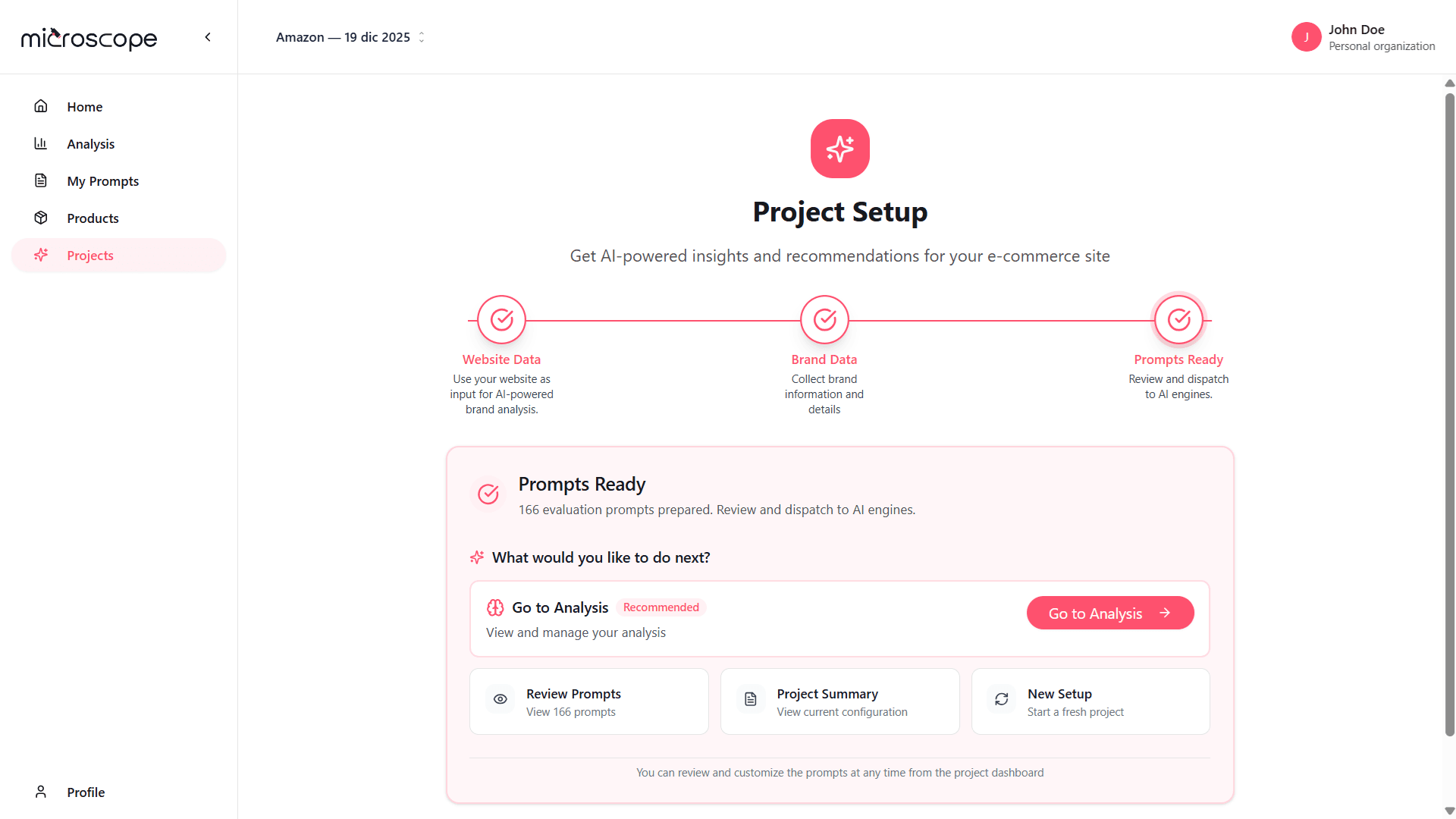
- Click Generate Prompts button to finalize
- The system will process your information and automatically generate a set of prompts to analyze your brand and products
- Once completed, you will see a confirmation that the process has been successfully completed
After Creating Your Project
What Happens Next
Once your project is created:
- You'll land on the project dashboard (initially empty)
- The project becomes the active project - the one currently selected
- You'll see prompts to complete additional setup tasks
- Automatic prompts are generated based on your industry
- You can start adding products and creating analyses
The Project Dashboard
Your new project dashboard displays:
- Project name and details at the top
- Quick stats - Number of products, analyses, and recent executions
- Recent activity - Latest analyses and results (once you have data)
- Quick actions - Buttons to add products, create analyses, run executions
- Navigation - Links to products, prompts, and analyses sections
Recommended Next Steps
After creating your project, follow this recommended sequence:
- Add products - Build your product catalog to enable product-specific monitoring
- Review automatic prompts - Explore the pre-generated prompts for your industry
- Create custom prompts - Add prompts specific to your monitoring needs
- Create your first analysis - Select prompts and configure an analysis
- Run an execution - Get your first insights
- Review results - Understand how AI models represent your brand
Multiple Projects Strategy
When to Create Multiple Projects
Consider creating multiple projects when you need:
- Geographic separation - Different regions with different languages or markets
- Brand separation - Multiple brands in your portfolio
- Business unit separation - Different divisions or product lines
- Client separation - If you're an agency managing multiple clients
- Testing environment - Experiment without affecting production monitoring
Project Naming Conventions
For organizations with multiple projects, establish a naming convention:
- By brand and market: "Nike - North America", "Nike - Europe"
- By client: "Client: Acme Corp", "Client: GlobalTech"
- By product line: "Division: Consumer Electronics", "Division: Home Appliances"
- By environment: "Production - Main Brand", "Testing - Main Brand"
Switching Between Projects
Once you have multiple projects:
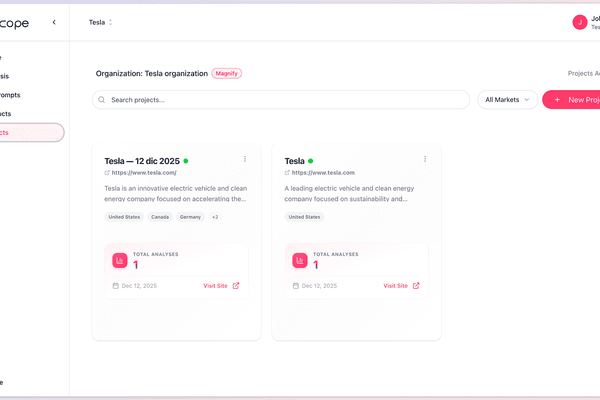
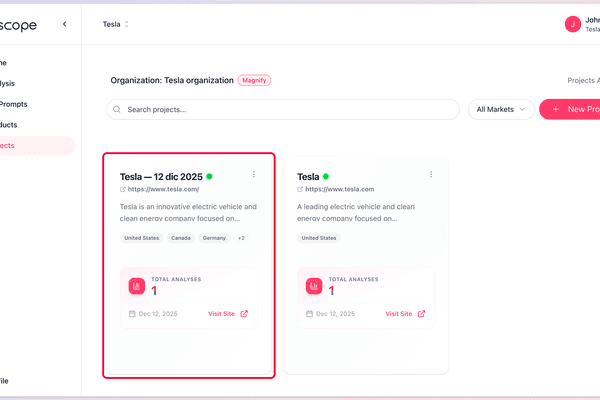
- Navigate to the Projects page
- Click on any project in the list to make it active
- The entire interface updates to show that project's data
- The active project name is displayed in the top navigation
Remember: projects are completely independent - data, analyses, and results don't mix between projects.
Common Issues and Solutions
Can't Create Project
If you can't create a project:
- Check plan limits - You may have reached your project quota
- Browser issues - Try refreshing the page or using a different browser
- Network problems - Check your internet connection
- Contact support - If issues persist after checking the above
Note: Currently all team members can create projects. Permission restrictions are planned for a future release.
Project Name Already Exists
If you see an error that the project name is taken:
- Choose a different, more specific name
- Add descriptive qualifiers (location, date, purpose)
- Check if a colleague already created this project
Invalid Website URL
If your website URL is rejected:
- Ensure you include https:// or http://
- Verify the URL is accessible and correct
- Avoid including paths or parameters - use the root domain
- Remove trailing slashes
Best Practices
- Be descriptive - Use clear, specific project names
- Plan your structure - Think about how you'll organize multiple projects
- Complete setup immediately - Add products and configure prompts right away
- Document your purpose - Use the description field to explain the project's goal
- Start simple - Your first project should be straightforward
- Test first - Run a quick analysis to verify everything is configured correctly
Next Steps
Now that you've created your first project, you're ready to:
- Learn about project configuration options
- Dive deeper into brand information setup
- Understand website configuration in detail
- Add products to your catalog
- Create and run your first analysis
Congratulations! Your project is the foundation for all your AI monitoring activities. Take time to configure it properly, and you'll benefit from more accurate and relevant insights.